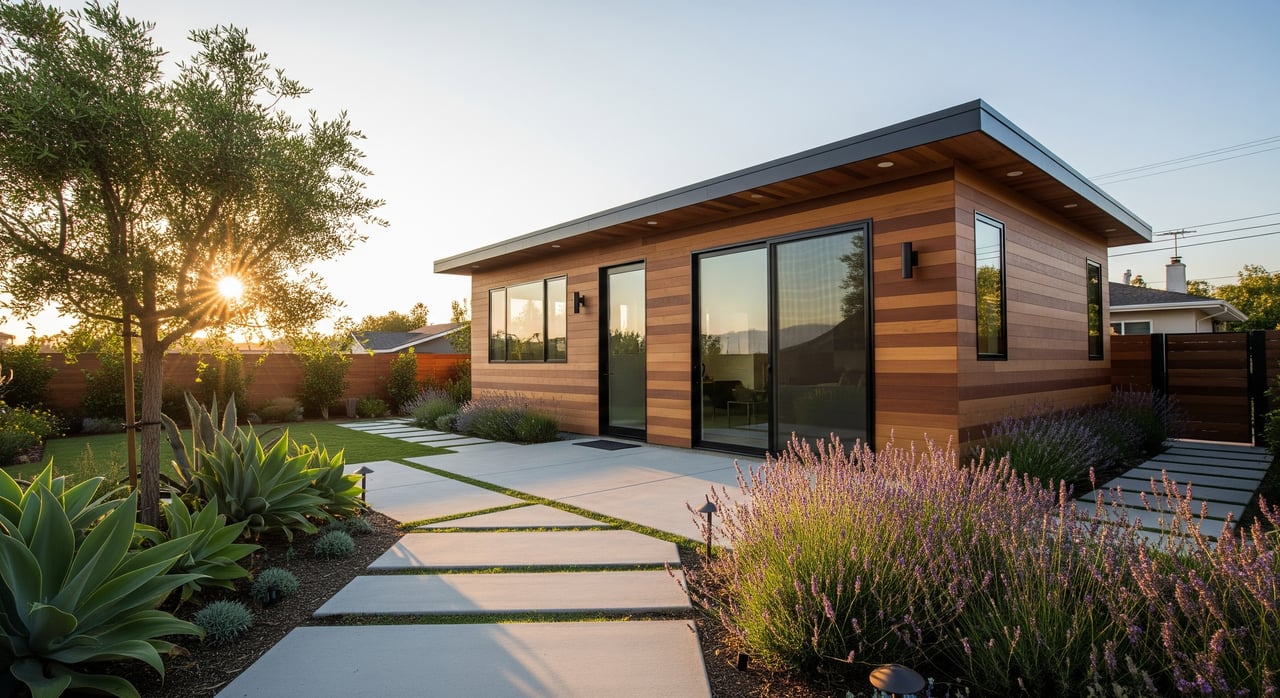
Thinking about adding an ADU to your Northridge property? You are not alone. Many Valley homeowners want extra space for family, long-term rental income, or a smarter exit strategy when they sell. In this guide, you will learn the basics that matter most in Northridge: what you can build, how Los Angeles approves ADUs, key site factors, rental and value impacts, and a step-by-step plan to get started. Let’s dive in.
ADU and JADU basics
An accessory dwelling unit is a self-contained home on the same lot as your main residence. It has its own kitchen, bathroom, and sleeping area. For plain-English state rules and examples, the California Department of Housing and Community Development provides a helpful ADU Guidebook.
A junior accessory dwelling unit is smaller and created within the existing home or an attached accessory structure. JADUs typically include an efficiency kitchen and are capped at smaller sizes under state guidance.
- Typical size guidance: many jurisdictions allow ADUs up to 1,200 square feet under state standards, while JADUs are commonly limited to about 500 square feet. See the HCD ADU Guidebook for details.
- Units per lot: state law generally allows at least one ADU plus one JADU on a single-family lot. Multifamily properties have additional allowances.
- Review pathway: if your ADU meets objective standards, it qualifies for ministerial approval without a discretionary hearing under California Government Code 65852.2.
How Los Angeles approves ADUs
Northridge is within the City of Los Angeles, so city standards apply. The Los Angeles Department of Building and Safety handles permits, plan checks, and inspections. Start with the city’s LADBS ADU resources for submittal checklists and process steps. Los Angeles City Planning applies zoning rules and coordinates with LADBS on objective standards. You can learn more about zoning tools and policies at planning.lacity.org.
If your proposal meets the City’s objective development and building standards, LADBS processes it ministerially. Expect plan check cycles with comments and revisions, then multiple inspections during construction. Timelines depend on workload and project complexity.
Development standards to expect
- Zoning and placement: ADUs are allowed in most single-family and many multifamily zones, subject to setbacks, height, and lot coverage limits. Rear-yard detached ADUs are common on Northridge lots.
- Building code: all ADUs must comply with the California Building Code for structural, fire, egress, plumbing, and electrical requirements.
Parking rules in LA
State law limits when cities can require parking for ADUs. In many cases, converting a garage does not trigger a replacement parking requirement. Properties near transit may also qualify for parking waivers. LADBS applies these state rules as part of its objective standards.
Fees and utilities
California restricts development impact fees for smaller ADUs. Many jurisdictions limit or waive impact fees for units under 750 square feet, while larger units may pay fees. Utility connection and capacity upgrades for water, sewer, and electrical can add cost, so plan for these early. The HCD ADU Guidebook outlines common fee and hookup considerations.
Owner occupancy and short-term rentals
Owner-occupancy rules have changed over recent legislative cycles and can depend on your ADU type and timing. Verify current requirements directly with LADBS. Short-term rental use is regulated in Los Angeles, and host registration and other limits may apply. Confirm the City’s rules before planning any transient use.
Northridge lot considerations
Northridge has many single-family lots that can physically fit a garage conversion, attached ADU, or detached cottage. Every parcel is different, so evaluate your property carefully before you design.
- Zoning and setbacks: confirm your zoning designation and the applicable yard setbacks, height limits, and lot coverage rules.
- Easements and shape: utility or storm-drain easements and irregular lot shapes can reduce buildable area.
- HOA and CC&Rs: some neighborhoods have rules that affect exterior changes. While state law limits certain restrictions, review your documents and consult a professional if needed.
- Parking and access: consider driveway length and safe access for residents. Converting a garage removes covered parking, so think through alternatives.
- Utilities: map water, sewer, and electrical routes. Some projects need separate metering or service upgrades.
- Seismic and structure: Northridge is in a seismically active region. Conversions and new detached ADUs often need foundation and anchorage upgrades to meet code.
- Fire and brush areas: most of Northridge is suburban and not in high wildfire severity zones, but parts of the Valley include brush areas. Verify any defensible space or fire-safety requirements if they apply to your parcel.
- Historic status: designated historic properties can require additional review.
Rental and value basics in Northridge
ADUs can provide steady long-term rental income in the Valley. In Northridge, renters include students, young professionals, and families, and proximity to campus and transit can influence demand and rent. Actual rent will depend on size, finishes, parking, and location.
Research generally shows ADUs can improve resale value, especially when the unit is fully permitted, well designed, and offers a separate entrance and functional layout. For market context and policy insights, the Terner Center shares useful ADU research and data.
Also plan for operating details:
- Property taxes: adding square footage usually increases assessed value. Confirm details with the LA County Assessor.
- Financing: many owners use home equity or construction loans. Compare terms and build in contingencies.
- Insurance: notify your insurer about the new unit and rental use so coverage fits your risk profile.
- Rent regulation: Los Angeles rent rules can be complex and depend on property characteristics and build dates. Confirm whether your ADU is subject to local rent regulations and understand tenant rights.
Step-by-step planning checklist
Use this simple workflow to move from idea to permit with fewer surprises.
- Preliminary goals
- Clarify your primary objective: multigenerational living, long-term rental income, home office, or resale value.
- Review your deed, CC&Rs, and any HOA rules.
- Parcel evaluation
- Confirm you are within the City of Los Angeles and check your zoning designation.
- Map your existing structures and yard areas to see what fits: garage conversion, attached addition, or detached unit.
- Learn the rules
- Read the HCD ADU Guidebook for state standards and best practices.
- Review LADBS checklists and submittal steps on the LADBS ADU page. If needed, request guidance from Los Angeles City Planning at planning.lacity.org.
- If you want the statute language for reference, see Government Code 65852.2.
- Design and budget
- Choose your ADU type: detached cottage, attached unit, garage conversion, or JADU.
- Engage a qualified design professional to prepare plans that meet objective standards and building code, including seismic requirements.
- Build a realistic budget that covers design, permits, possible impact fees, construction, utility upgrades, landscaping, and a contingency.
- Financing and tax planning
- Explore a HELOC, cash-out refinance, or construction loan.
- Discuss tax implications, depreciation, and rental income with your tax advisor.
- Permit submittal
- Submit a complete plan set and required forms to LADBS for plan check. Respond quickly and thoroughly to comments to avoid delays.
- Construction and inspections
- Hire licensed contractors. Follow the inspection schedule. Keep records of approvals and changes.
- Post-construction setup
- Final sign-off allows legal occupancy. If renting, set clear lease terms, follow local housing laws, and update insurance and any required registrations.
Common ADU scenarios in Northridge
Here are the options most Northridge owners consider, along with quick pros and watchouts.
Garage conversion
- Pros: fastest path to add a unit using existing structure. Often no replacement parking required when converting.
- Watchouts: plan for structural upgrades, moisture control, and utility routing. Loss of covered parking can affect daily convenience.
Detached backyard cottage
- Pros: privacy for both households, flexible layout, and strong rental appeal.
- Watchouts: must meet setbacks and height limits. Utility trenching and new foundation increase cost.
Attached addition
- Pros: integrates with existing home and can share some systems.
- Watchouts: careful design needed for sound and privacy. May be limited by current layout and setbacks.
JADU within the home
- Pros: lower cost, efficient use of space, and streamlined size.
- Watchouts: smaller footprint and shared systems. Confirm any owner-occupancy rules that may apply.
Mistakes to avoid
- Starting work before permits are issued.
- Designing without checking zoning, setbacks, and easements.
- Underestimating utility and seismic upgrade costs.
- Skipping insurance and tax planning.
- Assuming short-term rental use is allowed without verifying city rules.
Ready to evaluate your options?
If you are weighing an ADU for income, multigenerational living, or future resale, you deserve clear, local guidance. With deep San Fernando Valley experience and a property-management background, Nadia helps you align your ADU plan with your broader real estate goals, whether that means leasing strategy, a smart refinance, or timing a sale. When you are ready, connect with Nadia Arreola to talk through the numbers and next steps.
FAQs
Can I convert my Northridge garage into an ADU?
- Yes in many cases, and state rules often prevent cities from requiring replacement parking when a garage is converted, subject to LADBS standards.
What are the size limits for ADUs and JADUs in Los Angeles?
- State guidance allows ADUs up to about 1,200 square feet and JADUs around 500 square feet, with local objective standards applied by LADBS.
Do I need to live on-site if I build a JADU or ADU?
- Owner-occupancy rules have evolved and can depend on unit type and timing, so verify current requirements with LADBS before you design.
Will my property taxes go up after building an ADU?
- Adding square footage typically increases assessed value; contact the LA County Assessor for how reassessment may apply to your project.
Are ADUs allowed on multifamily properties in Northridge?
- Yes, state law supports ADUs on multifamily lots, including some conversions of existing space and new detached units, subject to objective standards.